
Wang Chuqin Asian Cup 2026 champion honors were secured in a breathtaking display of modern table tennis, as the world number one reaffirmed his status at the pinnacle of the sport. In a high-stakes final held in Bangkok, Wang overcame his long-standing rival Tomokazu Harimoto in a six-game thriller that showcased the evolution of the left-handed powerhouse. This victory marks a pivotal moment in the 2026 season, solidifying Wang’s transition from a rising star to the undisputed leader of the Chinese National Team (CNT). The match wasn’t just a battle for a trophy; it was a tactical chess match played at 100 miles per hour.
Wang Chuqin’s Road to the Asian Cup 2026 Title
Wang’s journey to the podium was characterized by a ruthless efficiency that left little room for doubt. Throughout the tournament, he appeared to be playing at a higher tempo than his opponents, utilizing his left-handed angles to dictate play from the opening serve.
The Road to the Asian Cup 2026 Title
The journey to the 2026 ATTU Asian Cup podium was far from a foregone conclusion. While the Chinese National Team has historically dominated this event, the narrowing gap between the world’s elite players was evident from the opening rounds. Wang Chuqin’s path to the gold medal was a testament to his physical conditioning and mental resilience.
Wang Chuqin’s Journey Through the Tournament
Wang entered the tournament as the top seed, but he was tested early. In the quarter-finals, he faced a resurgent Lin Yun-Ju. The “Silent Assassin” pushed Wang to the brink, exposing a slight vulnerability in Wang’s deep-forehand transition during the mid-distance rallies. However, Wang’s ability to adapt his service receive—opting for more short-push variations rather than his trademark “banana flick”—allowed him to regain control and secure a 4-2 victory.
The semi-final encounter against South Korea’s Jang Woo-jin was a masterclass in aggressive counter-looping. Jang, known for his explosive footwork, attempted to overwhelm Wang with high-velocity forehand drives. Wang responded with impeccable placement, frequently targeting Jang’s “crossover” point (the hip area where a player must decide between forehand and backhand). By the time Wang reached the final, he had conceded only four games across the entire tournament, showing a level of consistency that few could match.
The Growing Rivalry With Tomokazu Harimoto
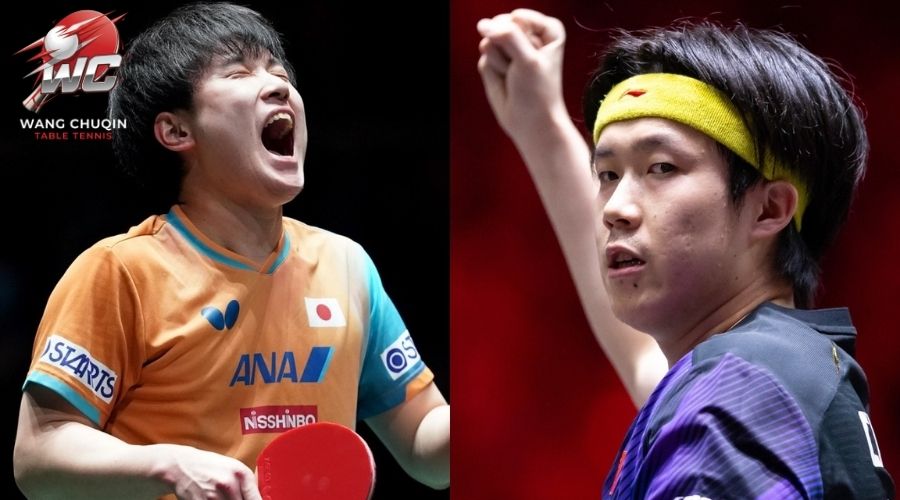
The final brought together the two most influential players of their generation. The rivalry between Wang Chuqin and Tomokazu Harimoto is one of the most storied in contemporary table tennis, dating back to their junior days. While Wang has held the upper hand in recent head-to-head statistics, Harimoto’s tactical evolution in 2025—focusing on a more disciplined backhand block and improved physical strength—made this 2026 matchup the most anticipated of the year.
Harimoto entered the final having dispatched several top-tier Chinese opponents in the previous twelve months, fueling a narrative that the Japanese ace had finally cracked the code of the CNT’s defensive structures. For Wang, this match was about more than a title; it was about asserting psychological dominance heading into the upcoming World Championships.
Match Analysis: Wang Chuqin vs Tomokazu Harimoto
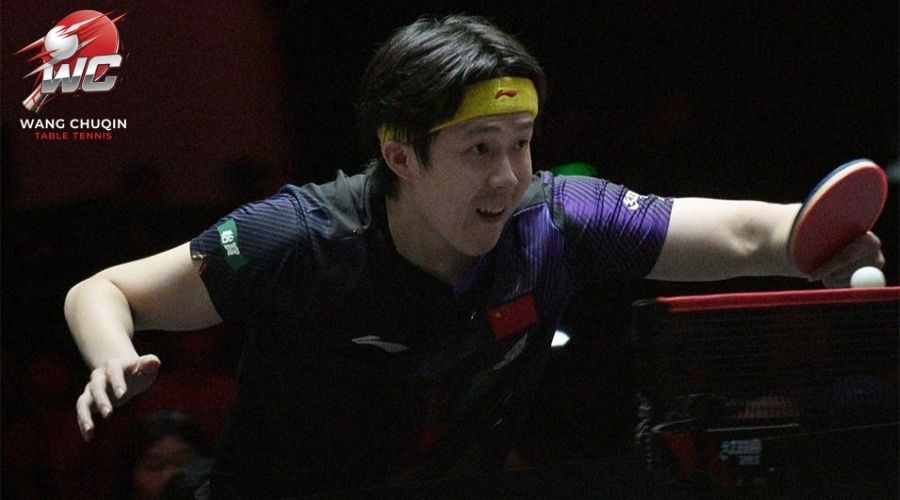
The final was a stylistic clash: Wang’s left-handed reach and forehand power against Harimoto’s lightning-fast backhand exchanges and close-to-the-table aggression. The atmosphere in the arena was electric, with every “Cholai!” from Harimoto met with a focused, silent intensity from Wang.
Tactical Breakdown of the Final
Wang’s strategy centered on neutralizing Harimoto’s backhand dominance. Harimoto is arguably the best in the world at taking the ball early and redirecting pace from his backhand wing. To counter this, Wang employed a “wide-angled service” strategy. By serving short to Harimoto’s forehand and following up with a deep, topspin drive to the backhand corner, Wang forced Harimoto to move laterally, preventing him from planting his feet and dictates the rhythm.
As the match progressed into the third and fourth games, the rally patterns shifted. Wang began to utilize more “heavy underspin” pushes during the short-short game. This forced Harimoto to initiate the attack on sub-optimal balls, allowing Wang to step back and use his superior reach to counter-loop. Wang’s forehand, characterized by its immense “dwell time” and spin, proved too heavy for Harimoto to block consistently.
Key Moments That Decided the Match
The turning point occurred in the fifth game, with the match tied at 2-2. Harimoto had raced to an 8-5 lead, utilizing a series of down-the-line backhand punches that caught Wang off guard. At this critical juncture, Wang’s coach took a timeout.
Upon returning, Wang changed his service placement to a long, fast serve into Harimoto’s body. This high-risk maneuver paid off, as Harimoto struggled to generate enough space for a full swing, leading to three consecutive unforced errors. Wang took the game 12-10, breaking Harimoto’s momentum. In the sixth game, Wang’s confidence was palpable. He began to dominate the “middle-to-middle” exchanges, eventually sealing the match with a cross-court forehand winner that left Harimoto stranded.
Technical Evolution of Wang Chuqin’s Playing Style
Becoming the Wang Chuqin Asian Cup 2026 champion required more than just the skills he possessed two years ago. Analysis of his play in Bangkok reveals a player who has refined his technical arsenal to minimize weaknesses.
Strengths: Speed, Forehand Power, Tactical Awareness
Wang’s greatest asset remains his “lefty advantage.” His ability to create extreme angles, particularly on the forehand side, makes it incredibly difficult for right-handed opponents to cover the table. However, in 2026, his speed has reached a new level. His “first three balls” (service, return, and first attack) are now executed with a level of precision that leaves little room for counter-play.
Furthermore, his tactical awareness has matured. Earlier in his career, Wang occasionally struggled when forced into defensive positions. Now, his “active block” has become a weapon. Instead of merely returning the ball, he adds side-spin or changes the pace, turning a defensive situation into an offensive opportunity.
How His Game Has Developed Over Recent Seasons
The most significant development in Wang’s game is his “backhand flick” (the Chiquita). While he was always proficient in this technique, he now uses it with greater variety in speed and depth. This prevents opponents from “camping” on their backhand side to wait for the loop.
Additionally, his physical conditioning has allowed him to sustain high-intensity play over longer matches. In the 2026 Asian Cup, Wang showed no signs of fatigue, even during the grueling 20-shot rallies that characterized the semi-final. His footwork is more economical, focusing on small, explosive adjustments rather than large, sweeping movements, which keeps his center of gravity stable for the next shot.
Impact on the Global Table Tennis Landscape
Wang’s victory sends a clear message to the rest of the world: China remains the standard-bearer for elite table tennis. However, the nature of this dominance is changing.
China’s Continued Dominance in Asian Competitions
The Asian Cup is often seen as a precursor to the World Championships. With Wang Chuqin taking the gold and other Chinese players filling the top ranks, the CNT has demonstrated that their “youth-to-veteran” pipeline is functioning perfectly. Despite the rise of talent from Japan, South Korea, and Chinese Taipei, the tactical depth and resource pool of the Chinese team allow them to stay one step ahead of the curve.
What This Title Means for Wang Chuqin’s Ranking and Legacy
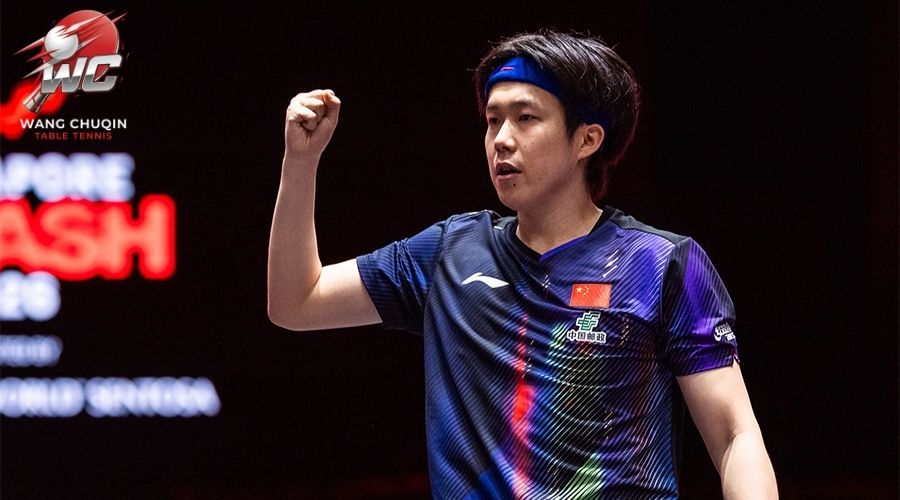
As the Wang Chuqin Asian Cup 2026 champion, Wang secures a significant haul of ITTF ranking points, further distancing himself from the pack at World No. 1. More importantly, this title contributes to his growing legacy as a “Grand Slam” contender. Having already found success in the WTT circuit and team events, securing a major individual continental title is a crucial milestone. He is no longer just “the next big thing”; he is the player every other professional is studying in hopes of finding a weakness.
Future Outlook for Wang Chuqin
With the 2026 Asian Cup trophy in his cabinet, the focus now shifts to the remaining major events of the 2026-2027 cycle.
Upcoming International Competitions
The immediate future sees Wang competing in the WTT Grand Smash events and the ITTF World Cup. These tournaments will offer more opportunities to face European powerhouses like Felix Lebrun and Truls Möregårdh. Given his current form, Wang enters these competitions as the heavy favorite. The challenge will be maintaining this peak physical and mental state throughout a congested international calendar.
His Role as One of China’s Next Table Tennis Leaders
Beyond his individual accolades, Wang is stepping into a leadership role within the CNT. With veterans like Ma Long and Fan Zhendong moving into the twilight of their careers, Wang is the new “Big Brother” (Da Ge) of the team. His work ethic and tactical discipline serve as a blueprint for the next generation of players currently training in the provincial systems.Conclusion
The crowning of Wang Chuqin Asian Cup 2026 champion is a defining moment for the sport. It highlighted a perfect marriage of raw power and sophisticated tactics, proving that Wang has the mental fortitude to overcome the world’s most dangerous opponents under immense pressure. As table tennis continues to evolve into a faster, more spin-oriented game, Wang Chuqin stands as its primary architect.
This victory in Bangkok is more than just a gold medal; it is a declaration of intent. For fans and analysts alike, watching Wang’s progression toward the 2028 Olympic cycle will be the central narrative of the coming years. If he continues to refine his game with the same dedication shown here, the “Wang Chuqin era” may only just be beginning.
