The Wang Chuqin form analysis 2025 season provides a comprehensive look into one of the most remarkable years in modern table tennis history. Wang’s meteoric rise, marked by strategic brilliance and relentless consistency, has set new standards in the sport. This season not only showcases his technical mastery but also highlights his mental resilience, adaptability, and unwavering pursuit of excellence. As we delve into the key highlights and performance breakdown, it is clear that Wang Chuqin’s 2025 run has cemented his status among the all-time greats.
Key Highlights and Performance Breakdown
The 2025 season has been nothing short of extraordinary for Wang Chuqin. His ability to perform under pressure, clinching major titles, and maintaining an unwavering level of play has attracted accolades from fans, commentators, and analysts worldwide. From the World Championships to the WTT Grand Slams, Wang’s journey this year reflects a blend of tactical precision, offensive firepower, and mental toughness.
Major Titles Secured in 2025
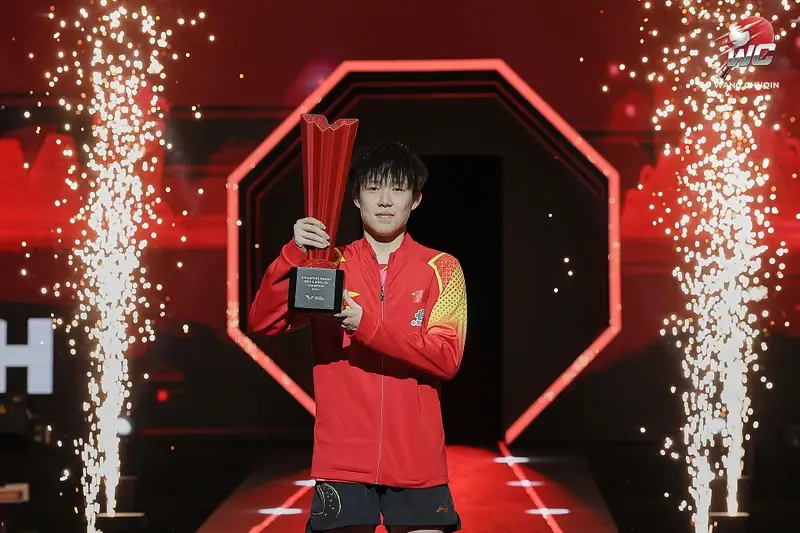
This season was a showcase of Wang’s capacity to seize major opportunities on the global stage. His victory at the Doha World Table Tennis Championships stands out as a historic achievement. Defeating Hugo Calderano 4-1 in the final, Wang demonstrated impeccable footwork, explosive attacking strokes, and excellent tactical adaptability. This win not only contributed valuable points to his ranking but also reinforced his dominance on the world stage. It was a moment where every rally reflected his maturity, with Wang absorbing pressure and seizing moments to turn the tide in his favor.
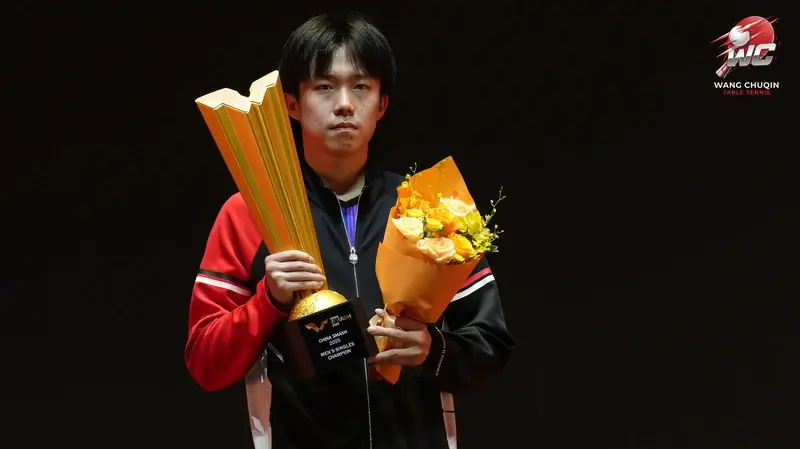
Beyond the World Championships, Wang continued his winning streak at the China Smash in Beijing, where he asserted his prowess against top-tier competitors in a commanding 4-0 victory over Felix Lebrun. This victory was not merely about winning a title but about sending a message that his offensive strategies are evolving, making him a formidable contender in every tournament he enters. His dynamic playing style combined with tactical patience proved crucial, emphasizing his growing versatility as a player.
Consistency and Match Performance
One of the defining features of Wang’s 2025 season is his exceptional consistency. Throughout the year, he recorded numerous straight-set victories against opponents ranked among the best and maintained a high level of play across all major events. His ability to close matches decisively under pressure revealed a mental robustness that many analysts compare to legendary players of the past. Wang’s tactical flexibility allowed him to adapt mid-rally, switching seamlessly between aggressive attacks and defensive pulls, making him unpredictable and difficult to counter.
His performance in critical moments demonstrated a strategic maturity that is rare among emerging players. Whether facing top-ranked challengers or in clutch situations during finals, Wang’s resilience was evident. His calmness under pressure, combined with precise shot selection, ensured that momentum stayed in his favor throughout the season.
World Ranking and Points Accumulation
Wang’s journey to reclaim and solidify the world No. 1 ranking was a highlight of 2025. After ascending back to the top spot in September, he maintained his lead primarily through top finishes and consistent performance in key tournaments. His best eight results from the past 12 months serve as the backbone of his ranking points, emphasizing the importance of continuous success across different events.
Climbing back to number one was not solely about accumulating points but about demonstrating resilience amidst fierce competition. Wang’s strategic approach involves careful planning of tournaments, focusing on maximizing points during premier events like the WTT Champions in Macao, where he secured his third title. This title, coupled with his ability to defeat top-ranked opponents, underscores the tactical maturity and physical conditioning that defines his 2025 season. For players aiming to emulate his success, incorporating advanced analytics tools can help optimize training and match strategies, aligning with the data-driven nature of modern sports.
Playing Style and Tactical Maturity
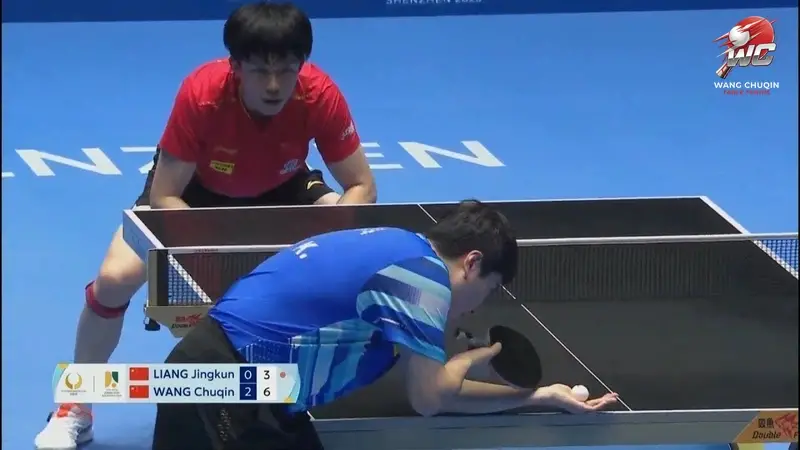
Wang Chuqin’s style in 2025 highlights an aggressive attacking game centered around his formidable two-wing loop. His forehand and backhand attack are characterized by quick, looping strokes that generate immense topspin, allowing him to dominate rallies early. His footwork is sharp, enabling him to position himself optimally, whether executing a rally-ending shot or preparing a counterattack.
Over the course of the season, Wang’s tactical evolution became more apparent. He displayed a keen awareness of his opponents’ weaknesses, adjusting spin and placement to gain the upper hand. His serve tactics—mixing different spins and placements—confound even the best returners and set the tone for offensive play. This strategic maturity, combined with his physical agility, makes Wang a constant threat at the table. Such tactical prowess can be enhanced through specific training programs, like Table Tennis Strategy Development, which focus on reading opponents and developing unpredictable shot variations.
Notable Opponents and Match Highlights
The 2025 season was peppered with battles against top-tier opponents, each illustrating Wang’s tactical adaptability and mental resilience. His victories over leading players like Hugo Calderano, Felix Lebrun, Tomokazu Harimoto, and Lin Shidong exemplify his capacity to handle high-pressure matches against diverse playing styles.
Key Victories Over Top Players
Against Hugo Calderano, Wang’s combination of quick footwork and aggressive looping from both wings dismantled Calderano’s formidable defense. His tactical patience and varied spin served to frustrate the Brazilian star, eventually securing a 4-1 win that highlighted his offensive dominance. Similarly, his 4-0 victory over Felix Lebrun at the China Smash was a showcase of precision, with Wang controlling the pace from the start and not giving Lebrun room to breathe.
His match against Tomokazu Harimoto in the US Smash exemplified his ability to handle rapid, unpredictable rallies. Wang’s resilience in adapting to Harimoto’s speed and spin variations was key to his flawless 4-0 victory. Each match displayed distinct strategies, emphasizing his tactical flexibility.
Difficult Matches and Clutch Performances
Not every match was straightforward, and Wang’s season also included moments of intense challenge. Notably, matches where he faced early setbacks but turned the tide through mental resilience showcase his growth. His ability to stay calm during critical moments, such as fighting back from a deficit or closing out tight sets, was instrumental in his success.
A pivotal moment was his semifinal match at the WTT Macao, where Wang faced a fierce opponent battling to extend the match. His strategic patience, combined with eager attack opportunities, allowed him to close the game decisively, reflecting both his technical proficiency and mental toughness. This balance of tactical intelligence and physical dexterity is what sets Wang apart and is central to his ongoing success.
Technical and Strategic Analysis
Wang Chuqin’s technical strengths lie in his offensive consistency, footwork, and tactical serve variations. His forehand loop, characterized by high topspin and quick recovery, is arguably among the best on the tour. His backhand, adaptable from offensive to defensive positions, allows him to keep opponents off-balance and set up offensive shots.
Strengths in Technique and Strategy
Wang’s offensive techniques are built on a foundation of explosive power combined with precise placement. His footwork allows him to position himself optimally, enabling him to execute loopers with minimal margin for error. His serve tactics—varying spin, length, and angles—are crucial in gaining early control of rallies, forcing opponents into defensive positions.
Strategically, Wang displays an exceptional understanding of opponent tendencies. His ability to analyze and exploit weaknesses during matches has allowed him to adapt and evolve. Incorporating video review and data analysis into training routines would further refine his tactical approach, ensuring he remains ahead of evolving playing styles.
Areas for Improvement
Despite his outstanding season, Wang can benefit from further physical conditioning to sustain peak performance throughout grueling tournaments. Developing stronger endurance would help enhance consistency in long matches and high-stakes scenarios. Additionally, diversifying his tactical repertoire—such as integrating more backhand block variations or deception serves—could make him even more unpredictable at the table.
Future development could focus on leveraging sports science technologies, like Real-Time Performance Monitoring, to track physiological metrics, identify fatigue, and tailor training regimes more effectively. This approach would support his strategic evolution, ensuring that his technical and physical assets are fully optimized for future seasons.
The 2025 season has established Wang Chuqin as a major player in international table tennis. He showcases consistent performance, smart strategies, and an aggressive style that often overwhelms opponents. His key titles, including the World Championships and WTT Grand Slams, reflect his commitment and tactical growth. As he hones his skills with an emphasis on fitness and strategy, his future looks bright. The Wang Chuqin form analysis 2025 season highlights his impressive development and leadership in the sport. Fans and future players can glean insights from his adaptive approach, calm demeanor, and relentless pursuit of excellence. This year’s journey provides valuable lessons on reaching and maintaining success in table tennis, promising an exciting future for Wang Chuqin and the sport itself.
More match trends, metrics and evaluations are available in the Stats & Analysis section.
